US Conec
I built USConec.com from scratch in the Umbraco CMS. Later I built USConec-cn.com, a Chinese-language sibling site, by reusing the same templates and component library so editors on both sites share the same content model. A few aspects of the build stand out from the other sites in this portfolio:
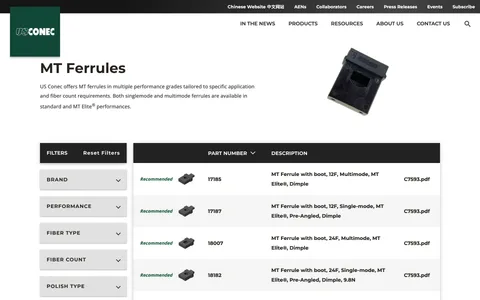
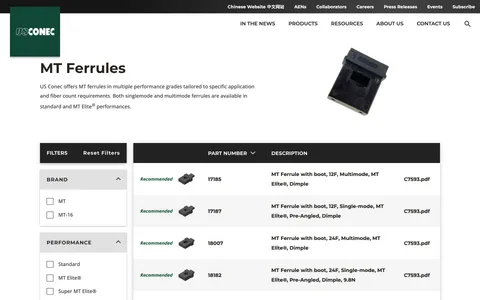
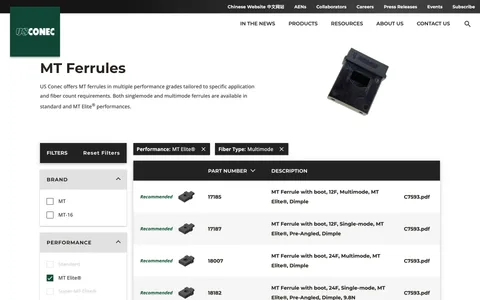
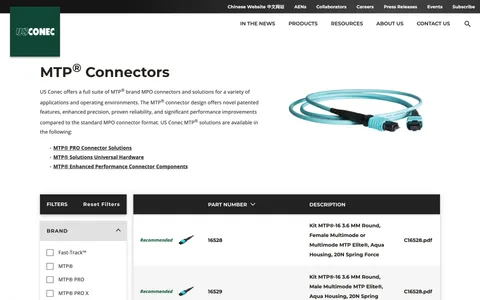
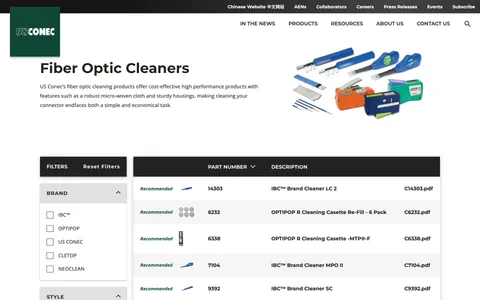
- Configurable Faceted Product Search. Every product category page (e.g., MT ferrules, MTP® connectors, fiber optic cleaners) renders a left-rail filter panel whose facets are configured per-category in the back office. The size and shape of that panel varies dramatically by category. MT ferrules expose seven facets (Brand, Performance, Fiber Type, Fiber Count, Polish Type, Endface Type, Fiber Cladding Size); cleaners use a different seven (Brand, Style, Connector Type, Cleaning Function, Use Type, Ferrule Size, Number of Cleans); MTP connectors need over a dozen, including color, gender, key orientation, and cable style. Editors pick which fields to expose, what to call them, and what order to show them in. No developer required when product data evolves.
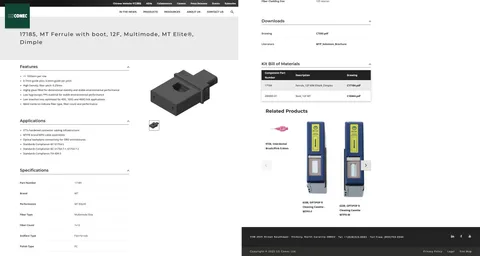
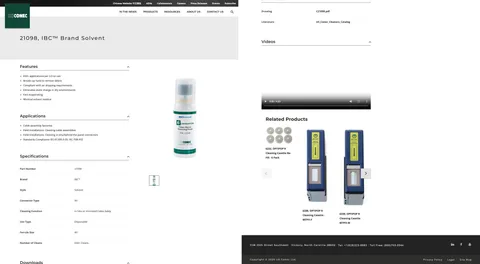
- Single Product Template, Dynamic Sections. Every product in the catalog is rendered from a single templated page that authors edit in one place in the CMS, then automatically inherits across the entire catalog. Sections of the page (Features, Applications, Specifications, Downloads, Kit Bill of Materials, Videos, Related Products) appear only when the underlying product actually has that data. For example, the IBC™ Brand Solvent product page shows a Videos section because that SKU has a product video attached, while most other products skip it.
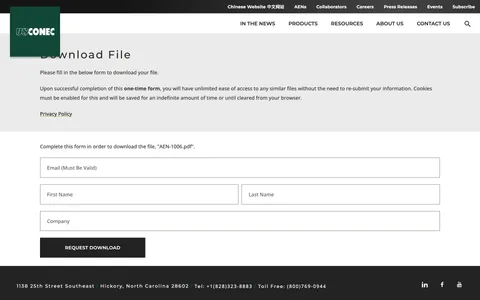
- Cookie-Gated Downloads with Allowlisting. Sensitive PDFs (such as the Applications Engineering Notes) live behind a download-request form. On successful submission, a cookie is set so the visitor doesn’t see the form again on subsequent visits. On the back end, access is constrained so only approved entities can pull protected files.
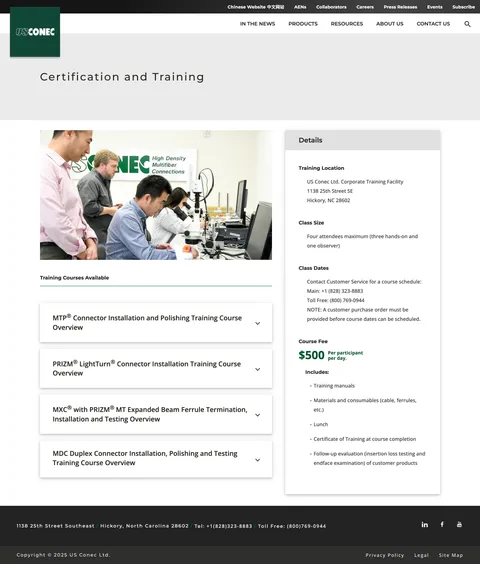
- Component-Based Builds with Room for Bespoke Layouts. Pages are composed of reusable components in the CMS, but a handful of pages needed something the component set didn’t quite cover. The Certification and Training page is a good example. It pairs a body content area with a sidebar “Details” panel (training location, class size, dates, fees, included materials) that isn’t part of the standard widget set. I built these as one-off templated layouts that still slot into the same CMS editing model so editors don’t feel like they’ve left the system.
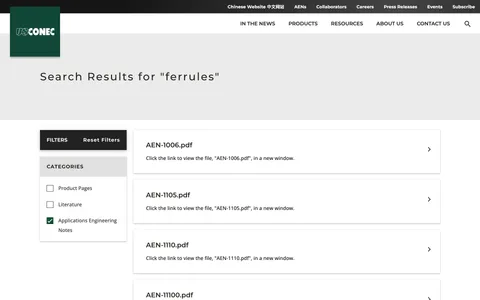
- Type-Aware Global Search. A single search box covers many content types across the site (product pages, Applications Engineering Notes, literature, videos, featured product landing pages, component items, and more). Card structure varies by type. Most results render as a clickable text card with a title and a summary, while video hits swap that out for an inline
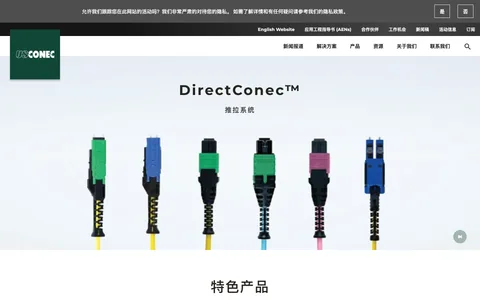
<video>player so you can play the clip right in the results list. For the text-card variant, the preview body is built by a type-aware extractor that walks a fallback hierarchy. Product pages surface their attribute data, downloadable files describe themselves, and general content pages pull a rich-text snippet. The left rail filters by content type, and only the types with matches for the current query appear in the filter list. Under the hood, the search runs on Examine (Umbraco’s Lucene wrapper). Pages are indexed automatically, but non-page content like PDFs and videos required custom indexes so they could appear in unified results alongside page hits. - Chinese Sibling Site, Hosted In-Country. Chinese regulations require in-country hosting, so USConec-cn.com runs on infrastructure separate from the US site, operated by a local partner. The codebase, templates, components, and product data model are shared with the US site, with translated content and a country-specific navigation layered on top. The geographic proximity also makes the site noticeably faster for visitors in China.
- Umbraco + Webpack Frontend. Built on the Umbraco CMS (ASP.NET Core, C# Razor) with a webpack-bundled, vanilla-JS frontend. The accordions, filter panel, and cookie banner are built from scratch and reused across the site.